The purpose of this article is to help sport shooters choose the right caliber for different shooting disciplines and to guide them through the 20 calibers that PGM Précision offers as standard.
It presents calibers by class, and then provides access to two levels of advice:
The first level is a comprehensive and practical approach that allows generalist precision shooters or beginners in long-range shooting (LRS) to access the expertise that PGM Précision has built up over 35 years of activity and from providing advice to precision shooters, both in the operational and civilian fields. Shooters thus benefit from the brand’s practical guidance and have a quick guide to choosing a caliber.
The second level offers a more detailed analysis for specialized shooters or those who wish to acquire more in-depth knowledge. It includes a list of principles and guiding questions for choosing a caliber, presenting each of the 20 calibers offered by PGM Précision with their history, specific features, advantages, and disadvantages. In conclusion, this second level ranks the 20 calibers in tables according to a number of criteria, then by type of use.
This article is intended as a guide for a wide range of uses, including LRS on gongs for leisure or competition, extreme long range (ELR) shooting, F-Class, Precision Rifle Shooting (PRS), Benchrest, etc. It summarises the recommendations and advice that PGM Précision offers based on its experience and history, but it is not intended to represent the total of all available knowledge on these calibers and ammunition, nor is it prescriptive in nature: each shooter is free to make their own choice based on their personal criteria, which may be aided by the information offered.

The table below shows the 20 calibers offered by PGM Précision, shown by “caliber categories” based on its four main rifles (Ultima Ratio, Mini Hécate II, Hécate II, and Ludis) and the type of barrel selected.
| Caliber categories | Caliber |
| 6 mm (.243″) | 6mm BR, 6mm XC, 6mm Creedmoor (available in early 2026) |
| 6,5 mm (.264″) | .260 Remington, 6.5 Creedmoor, 6.5×47 Lapua, 6.5-284 Norma, 6.5 PRC |
| 7 mm (.284″) | 7mm-08 Remington, .284 Winchester, 7mm PRC |
| Cal .30 (.308″) | .308 Winchester, .300 Savage, .300 PRC, .300 Norma Magnum |
| Cal .338 (.338″) | .338 Norma Magnum, .338 Lapua Magnum |
| Cal .37–.42 (Heavy Magnum) | .375 Swiss P, .416 Barrett |
| Cal .50 (Magnum / ELR) | .50 BMG |
All these calibers are certified and comply with the standards of the Permanent International Commission for the Testing of Small Arms (CIP) to enable individual certification of each PGM Précision rifle by the National Weapons Testing Center in Saint-Etienne, France.
These calibers meet a wide range of needs for operational and sport shooters and reflect PGM Precision’s desire to satisfy as many shooters as possible. As such, the company offers the largest number of calibers among manufacturers of precision rifles.
In order to help generalist precision shooters or beginners in LRS choose a caliber, this level presents a set of principles and the resulting trade-offs. It then summarizes the recommendations that PGM Précision can provide, based on its 35 years of advice and feedback from sport shooters.
The choice of caliber depends on a number of requirements and criteria. All are governed by the laws of physics and a generalization of Newton’s third law, which states that every force applied to a body causes an equal and opposite reaction force from that body. Therefore, any choice of caliber will have a primary effect as well as secondary effects that must be taken into account in order to make an informed decision.
Here are some important principles to consider when choosing a caliber:
Finding match-grade ammunition that offers an acceptable level of consistency in bullet velocity upon leaving the barrel (to minimize vertical dispersion of impacts on the target) can quickly become a significant challenge. In this case, the shooter has no choice but to reload with precision using high-quality components. This can be an exciting activity, but it requires a significant amount of knowledge, time, and testing.
While certain calibers such as the .308 Winchester are known to allow the barrel to withstand more than 10,000 rounds, others reduce the barrel’s lifespan to a few thousand rounds or less, leading to the barrel being considered as a “consumable” that needs to be replaced regularly. This has a financial impact that should be taken into account, as well as the need to regularly consult a gunsmith if the barrel cannot be changed as easily and quickly as, say, on a PGM Ultima Ratio or Ludis.
PGM Précision is one of the very few manufacturers of precision rifles that is happy to engage in dialogue with its customers to advise them on making the best choice not only of rifles and shooting equipment, but also of calibers.
The main recommendations for general use are as follows:
1 – Choose the caliber that suits your needs, not the other way around: don’t opt for a magnum caliber “just in case” if you won’t be using its range: it costs more, produces more recoil, and wears out the barrel faster.
2 – If you are new to long-range shooting, and for shots up to 1,100 yards (1,000 meters), choose a .308 Winchester caliber, or even a 6.5 Creedmoor if you are prepared to change barrels more frequently. For shots over 1,100 yards (1,000 meters), the .338 Lapua Magnum caliber is the benchmark.
The .308 Winchester remains the caliber of choice for many types of shooting up to 1,100 yards (1,000 meters) for the following reasons:
However, the .308 Winchester caliber has been subject to criticism, particularly due to the fact that newer calibers have been developed since its introduction in the 1950s. This explains the popularity of the 6.5 Creedmoor caliber developed in the early 2000s, which has an optimized case, ammunition with high ballistic coefficients, and broad support from ammunition manufacturers.
In absolute terms, the performance of this ammunition appears to be superior to that of the .308 Winchester, but at the cost of 4 to 6 times faster barrel wear and greater copper and carbon buildup, requiring more frequent and meticulous maintenance.
Given this situation, the feedback that PGM Précision received from many sport shooters who wanted to benefit from ballistic performance closer to that of the 6.5 Creedmoor while continuing to enjoy all the advantages of the .308 Winchester was to offer a Custom version of its Ultima Ratio and Ludis rifles.
Their distinctive feature is that they accept a longer barrel than typical .308 Winchester or 6.5 Creedmoor barrels (28 inches (71 cm) instead of 24 inches (60 cm)) and incorporate a faster twist rate (1:10 instead of the classic 1:12). These characteristics allow for a higher muzzle velocity and the ability to fire heavier bullets (with a higher ballistic coefficient) with a high level of stability. The barrel life, range of choice, and cost of ammunition, etc. remain advantages.
All these factors give the .308 Winchester caliber fired in PGM Précision Ultima Ratio – Custom and Ludis – Custom rifles the ability to compete with newer calibers, without their disadvantages, for shots up to a distance of 1,100 yards (1,000 meters).
Beyond the symbolic distance of 1,100 yards (1,000 meters), the same principles and compromises for choosing a caliber mentioned above continue to apply; however, the range of calibers that perform well at these distances is limited.
In general, magnum calibers, or even heavy magnums and ELR magnums, dominate, and among these, PGM Précision particularly recommends the .338 Lapua Magnum for generalist sport shooters.
This caliber is considered the benchmark in the world of LRS and ELR because it is a recent design (1982) and was developed to engage military targets at 1,600 yards (1,500 meters) and beyond, providing an intermediate solution between the .308 Winchester and the .50 BMG.
Its design, effective range, excellent available bullets (heavy 250 to 300 grains, stable and with remarkable ballistic performance) and high energy level mean that it regularly features on the podiums of LRS and ELR competitions. Many sport shooters have adopted this caliber to hit targets up to 2,200 yards (2,000 meters) away.
Among its other advantages, it should be noted that the .338 Lapua Magnum enjoys good support from ammunition manufacturers, giving shooters access to a wide choice of quality ammunition and personal reloading tools and components.
Its muzzle energy (6,600 joules) places it at the upper limit of what is accepted by the shooting ranges of many sport shooting federations, allowing it to be used in a much wider range of settings than just a few private long-range shooting ranges.
In return for these advantages, the use of a .338 Lapua Magnum comes with a number of constraints that must be taken into account.
Like all magnum calibers, the energy generated by this caliber produces significant recoil. It must therefore be supported by a heavier weapon, a longer barrel (to allow the slow powders to produce their effect), an effective muzzle brake, and appropriate level components throughout the weapon (including the scope and its mountings). Another point to consider is the barrel’s longevity, which is around 1,500 to 2,000 shots in competition mode (in an operational setting, it is closer to 4,000 shots with normal loads), which is rather high for magnum calibers, provided that the shooter is not looking for extreme velocities when reloading personally.
These characteristics and advantages have made the .338 Lapua Magnum caliber the most popular choice among sport shooters and specialized units that use a PGM Précision Mini-Hécate II rifle. Indeed, its manufacturing quality, remarkable ergonomics, and weight of 8.89 kg when equipped with an 32 inches (81 cm) Custom barrel (excluding scope) make it an ideal platform for the demanding shooter.
Given the ongoing dialogue that PGM Précision maintains with its customers and the most experienced shooters, the brand offers an exceptional choice of 20 calibers to meet the most specialized demands.
For sport shooters who want deeper explanations and details to guide them in choosing a more specialized caliber, the rest of this article offers a series of 15 guiding questions to help them choose a caliber that is better suited to their objectives and constraints, a quick guide to choosing based on use, a detailed presentation of each of the 20 calibers offered by PGM Précision, and summary tables based on significant criteria.
Choosing a caliber always involves compromises, especially since caliber alone does not determine the quality of ammunition or shooting performance. To achieve a high level of performance, the caliber must be compatible with the shooting discipline and shooting distance, which may itself depend on the shooting ranges available and/or the competitions in question, their rules, etc. In addition, the ballistic performance of the projectiles (weight, shape, ballistic coefficient, etc.) must be taken into account.
Experienced or specialized shooters consider many factors when choosing a caliber. Below is a concise and practical list of important points, as well as a quick decision guide and examples of choices depending on the use.
This is the most important factor that determines everything else.
This refers to the distance at which the shot must be effective (recreational shooting at ranges of 100 to 500 m, LRS competitions at 1,100 yards (1,000 meters) or ELR competitions at 2,200 yards (2,000 meters), etc.). The distance allows you to choose a cartridge that keeps the bullet controllable and supersonic over the greatest possible fraction of this distance.
This involves learning about ballistic coefficients, muzzle velocities, trajectory types, wind drift, etc. A high ballistic coefficient and muzzle velocity result in a flatter trajectory and reduced wind drift. It should be noted that for LRS and ELR, the ballistic coefficient and muzzle velocity are more important than the caliber itself.
The more a caliber causes heavy bullets to be fired at high speeds, the more recoil the rifle will have, which can impact accuracy, subsequent shots, comfort, concentration, and the shooter’s enjoyment. Lower recoil often allows shooters to place their shots more consistently, resulting in more enjoyable and consistent training sessions.
If the caliber is very specialized or uncommon, there is a risk that manufactured ammunition will be difficult to find commercially or very expensive, and that the shooter will need to reload their own cartridges.
Characteristics such as short or long action, magazine length, bolt face length, and feed reliability must be taken into account. Some cartridges require magnum mechanisms or single-shot platforms.
When a caliber allows for a high bullet velocity upon leaving the barrel, and the bullet is heavy, the barrel’s lifespan is likely to be shorter. While some calibers (such as the .308 Winchester) are known to allow the barrel to withstand more than 10,000 shots, others (such as magnum cartridges) reduce the barrel’s lifespan to a few thousand shots or less, leading to the barrel being considered a “consumable” that needs to be replaced regularly.
The twist rate of the barrel should stabilize the bullets used, especially very long and heavy bullets and monolithic bullets. It is recommended to check the twist rate for each type of bullet.
If the use of a suppressor or subsonic firing is important, the caliber and ammunition must allow for this. Some calibers offer good subsonic options, but this is generally not the case with magnum calibers.
Reloading makes uncommon calibers usable.
Heavier cartridges and ammunition increase the weight of shooting equipment and can impact movement. These considerations are also important for PRS, for example.
Certain large calibers, or military ammunition, are subject to legal restrictions in some countries. It is therefore advisable to check local legislation before making any purchase.
When participating in competitions, you must ensure that the cartridge and its weight comply with the limits for the category (e.g., F-Class/TR or PRS divisions). The rules may also limit calibers, weight, magazine capacity, and even barrel length.
Some experimental or new cartridges offer a limited choice of rifles.
Highly specialized or magnum-type calibers can be very expensive when you estimate their cost per shot, taking into account the barrel’s lifespan, etc.
The three questions below contribute to the process of choosing a caliber:
1. What is its use in recreational shooting or competitions?
Choose the caliber based on the type of competition, its rules, and the category limits:
2. What is your maximum practical range
3. How much recoil can the shooter handle?


The Norma 6mm Bench Rest (BR) cartridge was introduced by Norma in 1996. It is derived from the 6mm BR Remington cartridge marketed in 1978, but unlike the latter, which was designed for bullets weighing around 70 grains Norma standardised its chambering specifications for a very low drag (VLD) bullet weighing over 100 grains, thereby enhancing the cartridge’s long-range performance.
Typical bullet weight: 95 to 105 grains for competition bullets.
Initial velocity/representative energy: approximately 2,690 to 2,990 ft/s (820 to 910 m/s) depending on the bullet and barrel. Pressure and energy (C.I.P. Pmax and EE) of 4,050 bars and 2,545 joules.
Effective range: shooting distances from 330 to 1,050 yards (300 to 950m).
Typical uses: benchrest shooting and precision competition, 550 yards (500m) target shooting with small-caliber weapons.
Advantages: exceptional intrinsic accuracy, low recoil.
Disadvantages: the reduced size of the case makes it incompatible with most magazines.
Notes: The benchmark for precision in benchrest shooting. The 6mm BR is legendary in the benchrest shooting world for its ability to produce groupings of less than 0.25 MOA between 100 and 300m, and has broken numerous national and international records. Its reputation is based on the consistency of its groupings.
Notes regarding use with PGM Précision rifles: this caliber does not allow the use of a standard magazine. It is available with the barrels of the PGM Ludis, specifically developed for single-shot precision shooting, and those of the Ultima Ratio with manual loading.
Link to the C.I.P. data sheet: https://bobp.cip-bobp.org/uploads/tdcc/tab-i/6-mm-br-norma.pdf
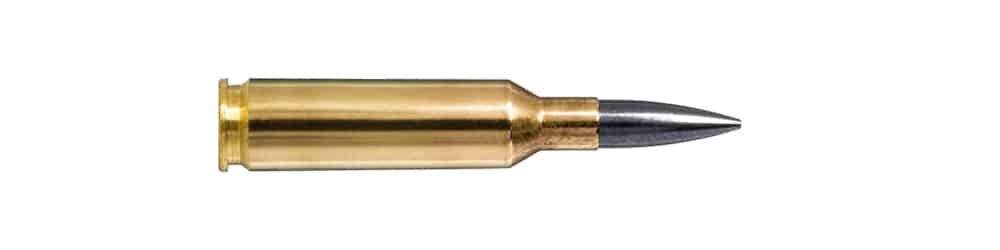
The 6mm XC cartridge was initially developed in the early 2000s as a Wildcat cartridge (not certified) specifically for shooting in American NRA High Power competitions by David Tubb, 11-time American national champion. This caliber was optimized for the long-range performance of bullets weighing over 100 grains and approved by the C.I.P. in 2015. It is considered one of the most accurate in the world in this discipline.
Typical bullet weight: 105 to 115 grains for 6 mm bullets with a high ballistic coefficient.
Initial velocity/representative energy: 2,950 to 3,120 ft/s (900 to 950 m/s) with 6 mm bullets with a very high ballistic coefficient, used in long range competitions. Pressure and energy (C.I.P. Pmax and EE) of 4,400 bars and 3,080 joules.
Effective range: shooting distances from 660 to 1,100 yards (600 to 1,000m).
Typical uses: long-range precision competition (F-Class, PRS).
Advantages: straight trajectory and exceptional performance in windy conditions over long distances with very little recoil.
Disadvantages: requires high-end ammunition components and precise loading development to reach its potential.
Notes regarding use with PGM Précision rifles: this caliber does not allow the use of a standard magazine. It is available with the barrels of the PGM Ludis, specifically developed for single-shot precision shooting, and those of the Ultima Ratio with manual loading.
Link to the C.I.P. data sheet: https://bobp.cip-bobp.org/uploads/tdcc/tab-i/tabical-fr-page17.pdf
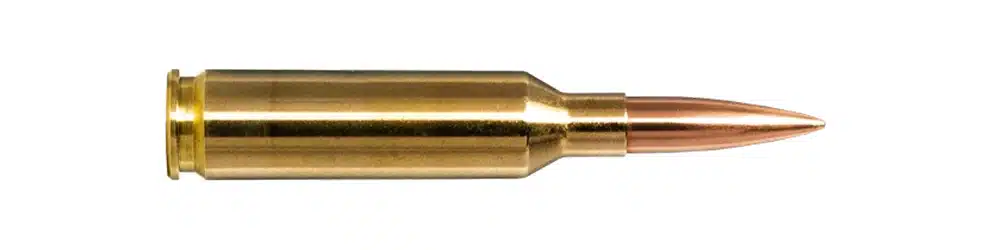
The 6mm Creedmoor cartridge was introduced by Hornady in 2017, although its design dates back to 2009 and its C.I.P. approval to 2019. It is essentially a 6.5 Creedmoor cartridge with a restricted neck to accommodate a high ballistic coefficient 6mm bullet. This modification allows for higher muzzle velocities while maintaining low recoil, enabling the bullet to remain supersonic at even greater distances than the 6.5 Creedmoor.
Typical bullet weight: 95 to 115 grains for 6mm bullets with a high ballistic coefficient.
Muzzle velocity/representative energy: 2,920 to 3,220 ft/s (890 to 980 m/s) with 6mm bullets with a very high ballistic coefficient, used in long-range competitions. Pressure and energy (C.I.P. Pmax and EE) of 4,350 bars and 3,200 joules.
Effective range: shooting distances from 850 to 1,300 yards (800 to 1,200 m).
Uses: long range precision competition (F-Class, PRS).
Advantages: flat trajectory and supersonic velocity at long distances with very low recoil.
Disadvantages: reduced barrel life.
Link to the C.I.P. data sheet: https://bobp.cip-bobp.org/uploads/tdcc/tab-i/6-mm-creedmoor-210923-en.pdf
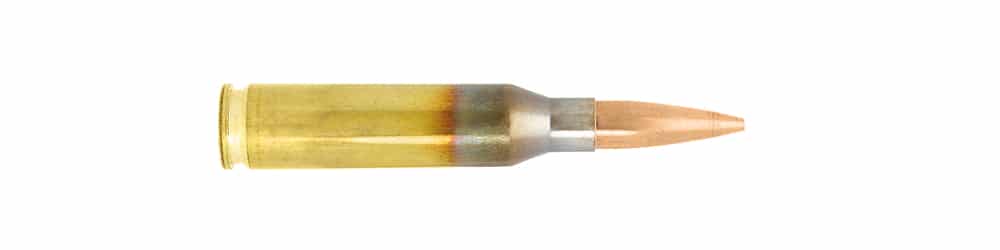
Introduced in 1997 as a Wildcat cartridge (not approved), this caliber was originally called 6.5-08 A-Square. However, it remained relatively unknown and only gradually gained the respect of shooters by demonstrating excellent performance in LRS, F-Class, tactical competitions, and precision shooting. It was finally approved by the C.I.P. in 2013 and is an alternative to the 6.5 mm caliber for standard length actions.
Typical bullet weight: 120-140 grains
Muzzle velocity/representative energy: approximately 2,690 to 2,990 ft/s (820 to 910 m/s) with 120 to 140 grain bullets. Pressure and energy (C.I.P. Pmax and EE) of 4,150 bars and 2,770 joules
Effective range: very effective up to 880 yards (800 m) or even 1,100 yards (1,000 m) for experienced shooters.
Uses: precision shooting and metal target shooting.
Advantages: this caliber offers ballistics similar to those of the 6.5 Creedmoor (which appeared later, in 2007) and less recoil than the .308 Winchester. Many shooters consider it one of the best versatile 6.5 mm cartridges, offering excellent ballistic coefficients and manageable recoil.
Disadvantages: Case capacity or chamber pressure resistance slightly lower than that of the 6.5×284 Norma or 6.5 Creedmoor, resulting in lower maximum velocity.
Notes: Adopted by many sport shooters (PRS, long range). This caliber has proven itself in precision shooting competitions and in benchrest/long-range shooting when carefully reloaded. Despite its potential for accuracy, it has not been as commercially successful as some had hoped.
Link to the C.I.P. data sheet: https://bobp.cip-bobp.org/uploads/tdcc/tab-i/tabical-en-page97.pd
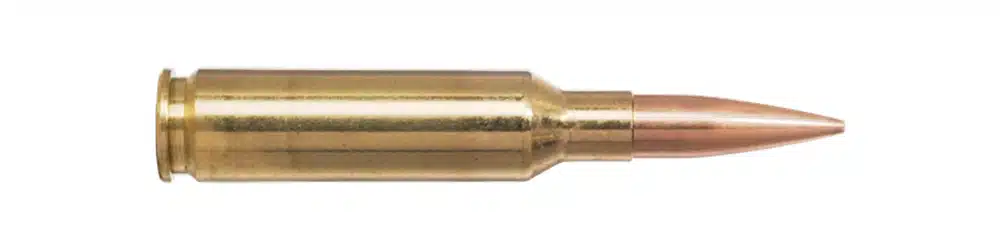
Designed by Dave Emary (Hornady) and Dennis DeMille (Creedmoor Sports) after a conversation at the 2005 Camp Perry National Matches, this caliber went into commercial production in 2008. The goal was to create a highly accurate caliber capable of firing projectiles with a high ballistic coefficient, but in a “short magazine” length cartridge (compatible with short actions), with moderate recoil and simple reloading formulas.
Typical bullet weight: 120 to 147 grains.
Muzzle velocity/representative energy: approximately 2,720 to 3,150 ft/s (830 to 960 m/s) with 120 to 140 grain bullets depending on the load. Pressure and energy (C.I.P. Pmax and EE) of 4,350 bars and 3,400 joules.
Effective range: excellent competition cartridge up to over 1,100 yards (1,000 m), very popular up to 660 or even 1.100 yards (600 or even 1,000 m) in PRS and long-range shooting.
Uses: precision shooting competition (PRS), F-Class, long-range shooting in general.
Advantages: low recoil, excellent bullets with high ballistic coefficients, significant support from many manufacturers, allowing it to rival the popularity of the .308 Winchester caliber. An article in the Precision Rifle Blog, based on a survey of the top 100 shooters in the Precision Rifle Series (PRS), showed that the 6.5 Creedmoor was on average 15 m/s faster than the 6.5×47 mm Lapua.
Disadvantages: slightly lower case capacity than some other 6.5 mm ammunition, but very effective, and shorter barrel life (approximately 4,000 rounds for standard use, 2,500 rounds for competition use). Requires regular barrel maintenance due to copper and carbon buildup.
Notes: Dominance in precision shooting competitions. Widely adopted in PRS, F-Class, and tactical competitions since the 2010s, 6.5 Creedmoor ammunition has won numerous national and international victories.
Link to the C.I.P. data sheet: https://bobp.cip-bobp.org/uploads/tdcc/tab-i/6-5-creedmoor-200418-fr.pdf
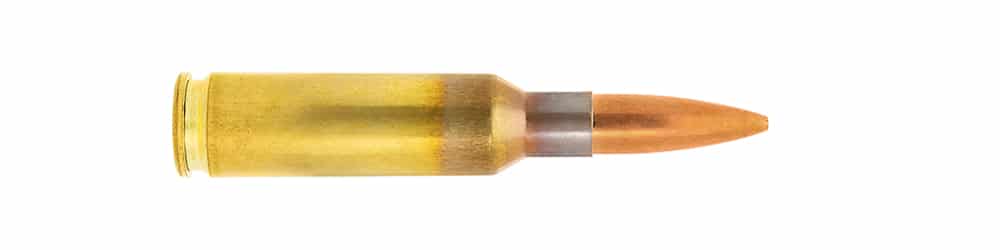
This caliber was developed by the famous Finnish brand specifically for competitive shooting and introduced in 2005. PGM Précision was one of the first rifle manufacturers to offer a production rifle in this caliber. It was designed from the outset to optimize accuracy, barrel life, and case capacity in a 6.5 mm cartridge for target and tactical shooting.
Typical bullet weight: 120 to 140 grains
Muzzle velocity/representative energy: approximately 2,700 to 3,100 ft/s (820 to 940 m/s) with lighter bullets, optimized for competition accuracy rather than raw muzzle velocity. Pressure and energy (C.I.P. Pmax and EE) of 4,350 bars and 3,300 joules.
Effective range: proven in competition up to 1,100 yards (1,000 m) and beyond.
Uses: benchrest and precision shooting (European F-Class/PR competitions), high-end competition cartridge.
Advantages: excellent intrinsic accuracy and case design for consistent loads.
Disadvantages: smaller case, therefore lower capacity than some 6.5 mm magnum cartridges, but excellent for competition. Requires regular barrel maintenance due to copper and carbon buildup.
Notes: a proven pedigree in competition. Extremely popular with European and American sport shooters (particularly in F-Class and PRS a few years ago). In the mid-2010s, it was the most popular cartridge among PRS/precision shooters and is still used today in many competition-winning rifles.
Link to the C.I.P. data sheet: https://bobp.cip-bobp.org/uploads/tdcc/tab-i/6-5-x-47-lapua-fr.pdf
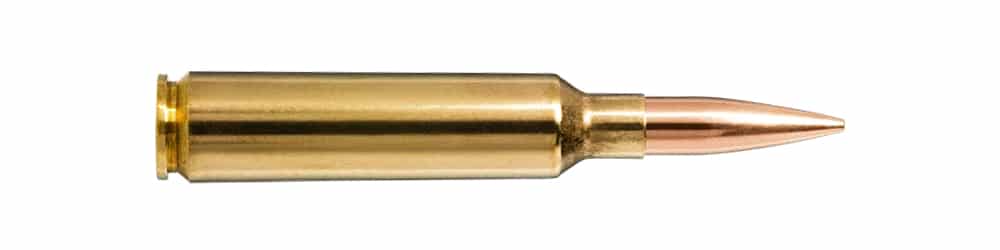
The 6.5-284 Norma cartridge (or 6.5×55 mm RB Norma) is derived from an experimental cartridge based on the .284 Winchester, whose neck has been reduced to 6.5 mm. The .284 Winchester cartridge, from which it is derived, was created around 1963 but was not a great commercial success. The 6.5 mm caliber allowed the use of long, aerodynamic bullets. In 1999, Norma had it approved by the C.I.P. and since then it has been standardized under the designation 6.5mm-284 Norma.
Typical bullet weight: 120 to 150 grains.
Muzzle velocity/representative energy: higher than that of the 6.5×47 Lapua and generally comparable to that of the 6.5 Creedmoor for the same bullets, with velocities of 2,850 to 2,990 ft/s (870 to 910 m/s). Pressure and energy (C.I.P. Pmax and EE) of 4,100 bars and 3,200 joules.
Effective range: very effective up to over 1,100 yards (1,000 m).
Uses: Long-range precision shooting (F-Class) where high ballistic coefficient bullets are an asset.
Advantages: Excellent long-range performance with heavy 6.5 mm bullets.
Disadvantages: Greater recoil than other 6.5 mm calibers and shorter barrel life. Requires regular barrel maintenance due to copper and carbon buildup.
Notes: The caliber of choice for long-range competition. The 6.5-284 has been used by many long-range shooters and F-Class competitors to achieve winning groupings and set personal records in long-range shooting. With an improved version of this ammunition, Rich DeSimone set a world record at 1,000 yards (914.4 m) with a group size of 1.564 inches (39.73 mm).
Notes regarding use with PGM Précision rifles : this caliber does not allow the use of a standard magazine. It is available with the barrels of the PGM Ludis, specifically developed for single-shot precision shooting, and those of the Ultima Ratio with manual loading.
Link to the C.I.P. data sheet: https://bobp.cip-bobp.org/uploads/tdcc/tab-i/tabical-en-page18.pdf
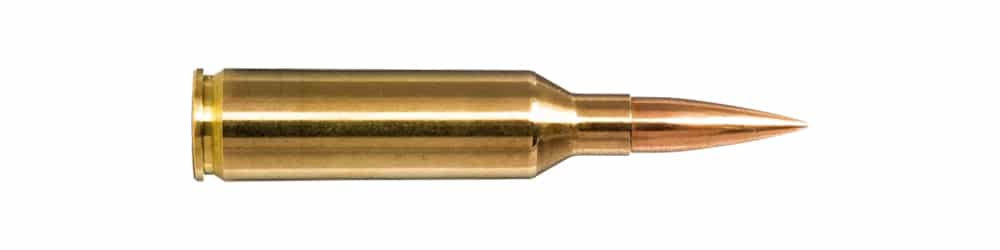
The 6.5 PRC (which stands for Precision Rifle Cartridge) cartridge was developed by Hornady starting in 2013 and officially introduced in 2018. It is essentially a more powerful, flatter-shooting version of the 6.5 Creedmoor, using the same bullet but with a larger case.
Typical bullet weight: 120 to 150 grains.
Typical muzzle velocity/energy: approximately 2,820 to 3,120 ft/s (860 to 950 m/s), making it a faster and more powerful caliber than the 6.5 Creedmoor. Pressure and energy (C.I.P. Pmax and EE) of 4,400 bars and 4,000 joules.
Effective range: designed for optimal accuracy up to over 1,300 yards (1,200 m).
Uses: PRS competition, F-Class.
Advantages: excellent energy and ballistic coefficient at long range, while maintaining manageable recoil compared to magnum-type ammunition. The velocity and ballistic coefficient of the bullets provide excellent wind resistance.
Disadvantages: as this is a very recent ammunition, it is difficult to predict the level of support it will receive in the future. Limited barrel life, averaging 1,400 rounds.
Note: adopted for PRS and long-range shooting. Designed as a higher-performance 6.5 mm option for PRS and long-range shooting such as F-Class, the 6.5 PRC has enabled shooters to win competitions and extend their effective supersonic range compared to the 6.5 Creedmoor.
Link to the C.I.P. data sheet: https://bobp.cip-bobp.org/uploads/tdcc/tab-i/6-5-prc-180709-en.pdf
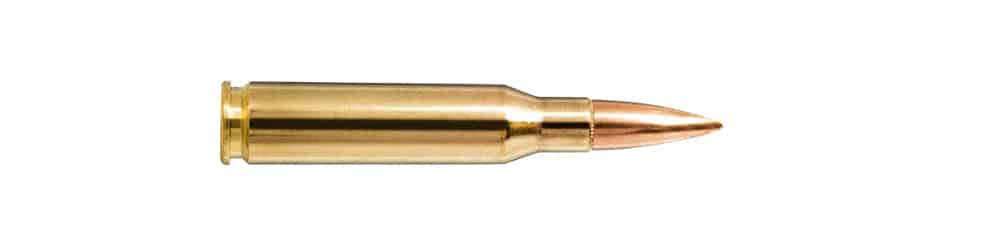
This is a rifle cartridge that is almost a direct copy of a cartridge developed around 1958, known as the 7mm/308. As its name suggests, it is derived from a .308 Winchester caliber case with a reduced neck to accommodate a 7mm bullet and a slight increase in case length. Of all the cartridges based on the .308 Winchester, it is the third most popular, behind the .308 Winchester itself and the .243 Winchester. In 1980, Remington Arms popularized the cartridge by giving it its own name and offering it as a caliber for some of its rifles.
Typical bullet weight: 120 to 175 grains.
Muzzle velocity/representative energy: approximately 2,590 to 2,820 ft/s (790 to 860 m/s) depending on bullet weight. Pressure and energy (C.I.P. Pmax and EE) of 4,150 bars and 3,720 joules.
Effective range: accurate and usable up to 750 to 1,000 yards (700 to 900 m) for competitive shooters.
Uses: mainly for target shooting and shooting at metal silhouettes.
Advantages: Effective flat trajectory and moderate recoil compared to magnum calibers.
Disadvantages: Recently surpassed by cartridges such as the 6.5 Creedmoor for long-range target shooting. Limited availability of quality ammunition.
Notes: An iconic success, regularly praised in the literature. Considered the “best all-around 7mm” in many specialized publications.
Link to the C.I.P. data sheet: https://bobp.cip-bobp.org/uploads/tdcc/tab-i/tabical-en-page35.pdf
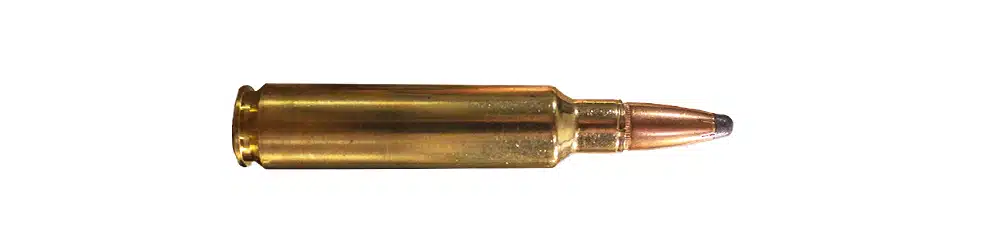
This caliber, introduced by Winchester in 1963, was designed to match the performance of the .270 Winchester and .280 Remington with the Winchester Model 100 semi-automatic rifle and the new Winchester Model 88 bolt-action rifle. The result is a 7 mm caliber cartridge with approximately the same overall length as the .308 Winchester, but with a wider body.
Typical bullet weight: 120 to 175 grains.
Muzzle velocity/representative energy: approximately 2,790 to 2,990 ft/s (850 to 910 m/s) depending on bullet weight, slightly higher than the 7mm-08 Remington for the same bullet weight due to the design of the case. Pressure and energy (C.I.P. Pmax and EE) of 4,400 bars and 3,625 joules.
Effective range: approximately 900 to 1,500 yards (800 to 1,400 m) for precision shooters.
Uses: long-range shooting with F-Class rifles.
Advantages: highly effective caliber with a short, stubby case. Excellent base for experimental cartridges and manual reloading.
Disadvantages: factory ammunition is very rare.
Notes: Remarkable success. Historically used as a base case for experimental cartridges and long-range conversions, rifles chambered with cartridges derived from the .284 have won prestigious F-Class shooting competitions.
Notes regarding use with PGM Précision rifles: this caliber does not allow the use of a standard magazine. It is available with PGM Ludis barrels, specifically developed for single-shot precision shooting, and those of the Ultima Ratio in manual loading.
Link to the C.I.P. data sheet: https://bobp.cip-bobp.org/uploads/tdcc/tab-i/284-win-201110-fr.pdf
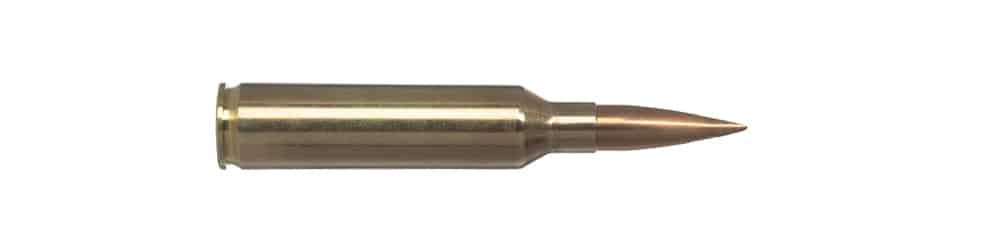
This modern caliber, developed by Hornady and recently approved in 2023, offers long, heavy bullets for its caliber in a standard long action. Positioned between the 6.5 PRC and the .300 PRC, the 7mm PRC uses high-velocity, thermally stable magnum powder, ensuring consistent velocity and extended barrel life.
Typical bullet weight: 160 to 195 grains
Muzzle velocity/representative energy: approximately 2,850 to 3,020 ft/s (870 to 920 m/s) depending on bullet weight. Pressure and energy (C.I.P. Pmax and EE) of 4,400 bars and 4,950 joules.
Effective range: designed for accuracy up to over 1,300 yards (1,200 m).
Uses: long-range shooting, PRS and F-Class competitions.
Advantages: excellent compromise between 7 mm bullets with a high ballistic coefficient and magnum performance.
Disadvantages: greater recoil than the 6.5 PRC, but higher impact energy and shorter barrel life.
Notes: The high-energy 7 PRC mm in PRS. Adopted by champions who want the performance of a 7 mm magnum with competition bullets. Its popularity is recent and linked to podium finishes in PRS.
Link to the C.I.P. data sheet: https://bobp.cip-bobp.org/uploads/tdcc/tab-i/7-mm-prc-230314-fr-1.pdf

This caliber was developed in the 1950s as a standard for small arms among NATO countries. The goal was to replace the .30-06 Springfield ammunition (introduced in 1906) as the standard in the U.S. Army’s small arms, as it had become obsolete and was considered too heavy, too large, and generated too much recoil. The 7.62×51mm is both smaller and lighter than its predecessor, while maintaining similar performance at medium range.
Launched on the civilian market by Winchester in 1952 and then adopted as ammunition for the M14 rifle in 1954 by the US Army, it is chambered in many iconic weapons from the Cold War and beyond.
Since its introduction into the civilian world, this caliber has been a benchmark against which many other calibers are judged, whether in operational or sporting shooting.
Typical bullet weight: 150 to 190 grains.
Muzzle velocity/representative energy: approximately 2,690 to 3,100 ft/s (820 to 940 m/s) with lighter bullets, optimized for competition accuracy rather than raw muzzle velocity. Pressure and energy (C.I.P. Pmax and EE) of 4,350 bars and 3,300 joules.
Effective range: proven in competition up to 1,100 yards (1,000 m) and beyond.
Uses: armed forces/law enforcement (NATO), precision shooting competitions (F-Class TR), training.
Advantages: excellent availability and competitive prices for manufactured ammunition and reloading components, moderate recoil, long barrel life. Caliber with a very large user community, allowing access to dedicated competitions, and accepted at all shooting ranges and long-distance shooting ranges.
Disadvantages: less effective at long range than certain ammunition at shooting distances greater than 1,000 or 1,200 meters.
Notes: Iconic role. The ammunition of choice within NATO and in shooting competitions for decades, it is used in countless military sniper rifle systems and service rifles, and is used in standardized shooting competitions. Its reputation is based on its widespread operational use and the many historic successes of military snipers.
Notes on use with PGM Précision rifles : this caliber offers a wide choice of barrels in the PGM range. Drawing on its experience in developing the Ultima Ratio, which has been used by the RAID since 1991 as well as by numerous sniper units, PGM Precision offers a 71 cm custom barrel which, when combined with this ammunition, achieves ballistic performance similar to that of more recently developed 6.5 or 7 mm calibers.
Link to the C.I.P. data sheet: https://bobp.cip-bobp.org/uploads/tdcc/tab-i/tabical-fr-page125.pdf

This ammunition was developed by Savage Arms in 1920 to replace the .303 Savage. Despite its short case and pronounced shoulder, the cartridge is capable of remarkable accuracy at several hundred meters.
Typical bullet weight: 150 to 180 grains
Muzzle velocity/representative energy: approximately 2,400 to 2,800 ft/s (730 to 860 m/s) depending on bullet weight. Pressure and energy (C.I.P. Pmax and EE) of 3,650 bars and 3,525 joules.
Effective range: practical accuracy up to 500 yards (400 m)for target shooting or metal silhouettes.
Uses: classic cartridge for medium-range shooting.
Advantages: shorter-action cartridge offering greater firepower than some older short cartridges.
Disadvantages: largely historical, this caliber has been replaced by the .308 Winchester and others for most modern uses. High-quality ammunition not available.
Notes: Iconic design. Historic cartridge that proved that short-action cartridges could offer performance close to that of magnum ammunition in sporting rifles.
Link to the C.I.P. data sheet: https://bobp.cip-bobp.org/uploads/tdcc/tab-i/tabical-fr-page120.pdf
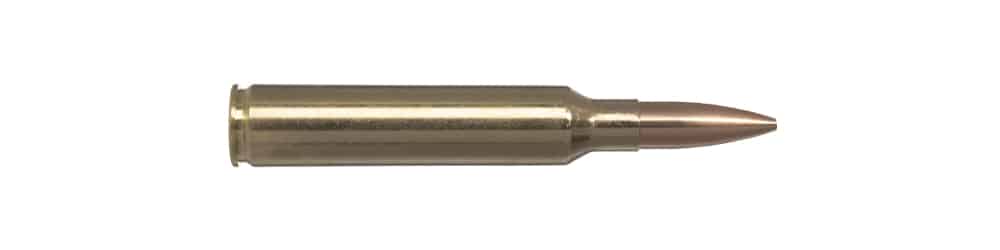
This rifle cartridge was recently designed by Hornady Manufacturing Company and released in 2018. It was approved by the C.I.P. in 2019. It was specially developed for long-range precision shooting applications and stands out for its modern design and excellent ballistic performance.
The .300 PRC excels in long-range shooting thanks to its heavy bullets and high ballistic coefficient. For example, a 225-grain bullet can reach an initial velocity of 850 m/s while maintaining significant energy and a flat trajectory at distances greater than 1,000 meters.
Typical bullet weights: 180 to 225 grains, long, very low drag VLD-type bullets.
Initial velocity/representative energy: approximately 2,790 to 3,120 ft/s (850 to 950 m/s) depending on the weight of the bullet. Pressure and energy (C.I.P. Pmax and EE) of 4,400 bars and 5,800 joules.
Effective range: designed for greater accuracy than the standard .300 Winchester Magnum, excellent up to 1,300 or even 1,700 yards (1,200 or even 1,500 meters) in practice.
Uses: long-range precision shooting, ELR competitions.
Advantages: designed for long, heavy projectiles, with excellent stability and a high ballistic coefficient.
Disadvantages: larger ammunition and rifles, greater recoil and faster barrel wear, and limited availability of manufactured ammunition.
Notes: Long-range cartridge specially designed for competition. Many long-range competition shooters have chosen the .300 PRC, used in prestigious PRS and ELR events.
Link to the C.I.P. data sheet: https://bobp.cip-bobp.org/uploads/tdcc/tab-i/300-prc-200428-fr.pdf
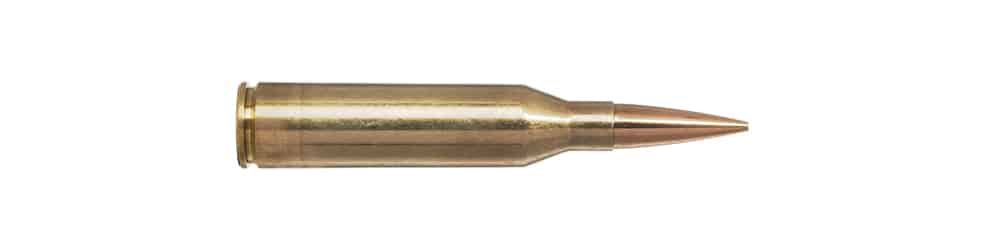
The .300 Norma Magnum, also known as the .300 NM or 300 Norma, is a magnum rifle cartridge developed by Swedish ammunition manufacturer Norma Precision. The .300 Norma Magnum uses a .338 Norma Magnum case with the neck reduced to .30 caliber. This designation distinguishes it from the older .308 Norma Magnum, designed in 1960. It has gained popularity among long-range shooters.
Typical bullet weight: 180 to 220 grains with a high ballistic coefficient.
Muzzle velocity/representative energy: approximately 2,820 to 3,220 ft/s (860 to 980 m/s) depending on bullet weight. Pressure and energy (C.I.P. Pmax and EE) of 4,400 bars and 5,485 joules.
Effective range: effective supersonic range for shots over 1,650 yards (1,500 m).
Uses: long-range accuracy for military shooting and ELR competitions.
Advantages: high kinetic energy and long supersonic range.
Disadvantages: requires magnum action, greater recoil and barrel wear. Limited supply of manufactured ammunition.
Notes: Interest in extreme long range (ELR) shooting and military shooting. Adopted by ELR competitors and evaluated in military and sniper programs for its supersonic performance at extreme ranges; used in ELR competition to extend supersonic range beyond the .300 Winchester Magnum.
Link to the C.I.P. data sheet: https://bobp.cip-bobp.org/uploads/tdcc/tab-i/300-norma-mag-fr.pdf
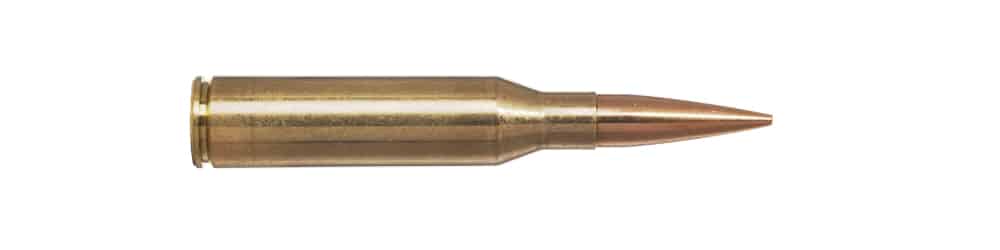
The .338 Norma Magnum is a cartridge first introduced in 2008 and entered into production in 2009, designed by Norma in Sweden.
This cartridge was initially developed as an experimental cartridge for long-range sport shooting by American sport shooter Jimmie Sloan, with the help of Dave Kiff, owner of Pacific Tool and Gauge, who manufactured the reamers and chamber gauges. It was designed to optimize the shooting of the 300-grain, 8.6 mm caliber Sierra HPBT MatchKing bullet with mechanisms and magazines whose length does not allow for cartridges longer than 91.44 mm in total length. The .338 Norma Magnum cartridge was C.I.P. certified in 2010.
Typical bullet weight: 200 to 300 grains.
Initial velocity/representative energy: approximately 2,700 to 3,210 ft/s (825 to 980 m/s) depending on the weight of the bullet. Pressure and energy (C.I.P. Pmax and EE) of 4,400 bars and 6,170 joules.
Effective range: effective supersonic range for shots over 1,650 yards (1,500 m).
Uses: military precision shooting, very long range shooting competitions (LRS and ELR).
Advantages: exceptional energy and penetration at long range, supersonic velocity at long range, recoil slightly lower than that of the .338 Lapua Magnum.
Disadvantages: recoil remains significant, requires heavy rifles and specific ammunition. Rapid barrel wear (approximately 1,500 to 2,000 rounds).
Notes: Notable achievements/role. The .338 Norma Magnum is a modern, military-oriented long-range caliber that rivals the .338 Lapua in terms of very long-range performance. Used by shooters in ELR competitions and evaluated by military units—notable for enabling ELR engagements beyond the typical ranges of the .308 Winchester.
Link to the C.I.P. data sheet: https://bobp.cip-bobp.org/uploads/tdcc/tab-i/tabical-en-page133.pdf
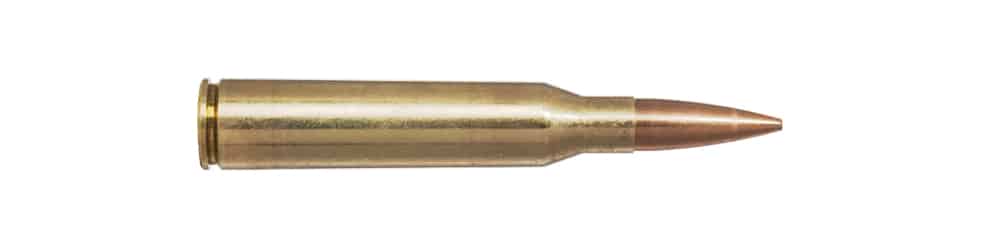
This ammunition was developed in the 1980s as a high-powered, long-range cartridge for military snipers. It became widely available following its use in the wars in Afghanistan and Iraq. It can penetrate military body armor at ranges of up to 1,000 meters.
Typical bullet weight: 250 to 300 grains.
Muzzle velocity/energy representative of factory ammunition: approximately 2,760 to 2,990 ft/s (840 to 910 m/s) depending on the bullet. Pressure and energy (C.I.P. Pmax and EE) of 4,200 bars and 6,600 joules.
Effective range: use in service and competition up to approximately 1,650 to 1,950 yards (1,500 to 1,750 m).
Uses: military sniper systems, very long range precision shooting competitions (TLD and ELR).
Advantages: Designed specifically for long-range supersonic performance and high penetration capability. It has slightly higher ballistic performance than the .338 Norma Magnum on average due to its longer case length. The .338 Lapua Magnum has the potential to become a new operational caliber and has a wide selection of high-quality manufactured ammunition available.
Disadvantages: significant recoil, requires heavy rifles, and rapid barrel wear (approximately 1,500 shots).
Notes: This caliber is well known in the field of operational shooting, which explains the expertise that PGM Précision has developed over more than 20 years of equipping numerous intervention units with weapons of this caliber. It is also becoming increasingly popular in LRS and ELR competitions, having won a number of victories. At the 2025 edition of Extreme Shot Italia, the .338 Lapua Magnum was the most widely used caliber in both the “light class” (shots up to 1,640 m) and “heavy class” (shots up to 2,000 m) categories.
Link to the C.I.P. data sheet: https://bobp.cip-bobp.org/uploads/tdcc/tab-i/338-lapua-mag-fr.pdf
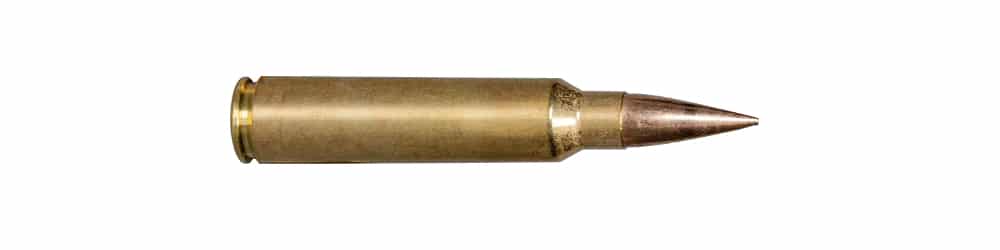
The .375 Swiss P cartridge is presented by RUAG Ammotec as bridging the ballistic performance gap between the .338 Lapua Magnum and the .50 BMG. This gap is particularly significant in terms of kinetic energy at long range. That is why it has been designed to be easily rechambered by simply changing the barrel, thus offering improved performance for robust rifles originally designed for the .338 Lapua Magnum, which is also available in .338 Norma Magnum and .300 Norma Magnum calibers.
Typical bullet weight: 350 grains.
Initial velocity/representative energy: example from RUAG factory, with a 350-grain bullet leaving the barrel at approximately 2,850 ft/s (865 m/s). Pressure and energy (C.I.P. Pmax and EE) of 4,200 bars and 7,500 joules.
Effective range: designed for supersonic performance and armor penetration up to approximately 2,200 yards (2,000 m).
Uses: modern military sniper/anti-material requirements, requiring long-range armor penetration and an extended supersonic velocity range; heavy class ELR competitions.
Advantages: ammunition length comparable to a .338 Lapua Magnum, making it compatible with magnum caliber weapons. Extreme energy and armor penetration, very long-range ballistic performance. Manufactured ammunition available.
Disadvantages: specialized, significant recoil, niche professional use, and recent and limited commercial availability.
Notes: Very recent cartridge designed for very long-range shooting and anti-material ammunition (between .338 LM and .50 BMG). Its introduction marks an important milestone in the field of long-range cartridges.
Notes on use with PGM Précision rifles : Capitalizing on more than five years of experience that the company has developed with this caliber in the field of operational shooting, the PGM Mini Hécate II is compatible with the .375 Swiss P caliber and is the first production weapon on the market that accepts this ammunition.
Link to the C.I.P. data sheet: https://bobp.cip-bobp.org/uploads/tdcc/tab-i/375-swiss-p-180302-fr.pdf
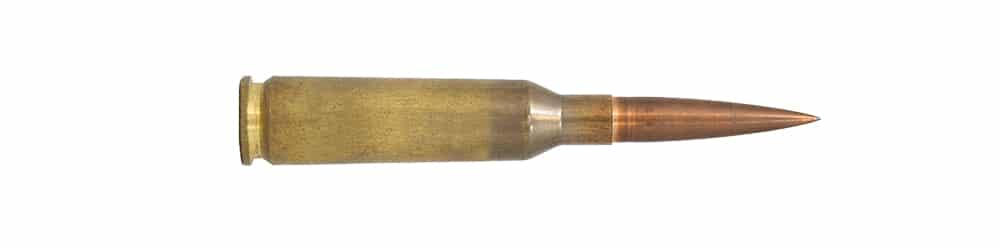
The .416 Barrett cartridge was designed by Chris Barrett with the help of Pete Forras. The shape of the bullet was determined using NACA equations for low supersonic drag and represents an improvement on the .50 BMG. In fact, it is a cartridge derived from the .50 BMG, shortened to 83mm instead of 99mm and with a reduced neck to accommodate a .416 caliber projectile weighing 398 grains.
Since both cartridges, the .50 BMG and the .416 Barrett, have identical base dimensions, converting a rifle to use either cartridge simply involves changing the barrel.
Typical bullet weight: 400 to 450 grains, or even 550 grains for certain ELR competitions.
Initial velocity/representative energy: approximately 2,750 to 3,150 ft/s (840 to 960 m/s) depending on the bullet. Pressure and energy (C.I.P. Pmax and EE) of 4,200 bars and 14,250 joules.
Effective range: long-range engagements, often similar to that of the .50 BMG depending on the load.
Uses: long-range rifles and specialized platforms; heavy class ELR competitions.
Advantages: ballistic performance at shooting distances exceeding 2,000 m.
Disadvantages: significant recoil, specific rifles and ammunition, limited commercial availability.
Notes: The .416 Barrett is less common than the .50 BMG, and its characteristics vary depending on the manufacturer; some offer variants of the .416 optimized for specific platforms.
Some jurisdictions in the United States, notably California and New Jersey, as well as some countries such as Argentina, Austria, Belgium, Italy, Lithuania, the Netherlands, and Denmark, as well as the Australian state of Western Australia, restrict or prohibit civilian possession of rifles chambered for the .50 BMG cartridge, but not their equivalent in .416 Barrett caliber, which is more powerful from a ballistic standpoint.
Link to the C.I.P. data sheet: https://bobp.cip-bobp.org/uploads/tdcc/tab-i/416-barrett-fr.pdf
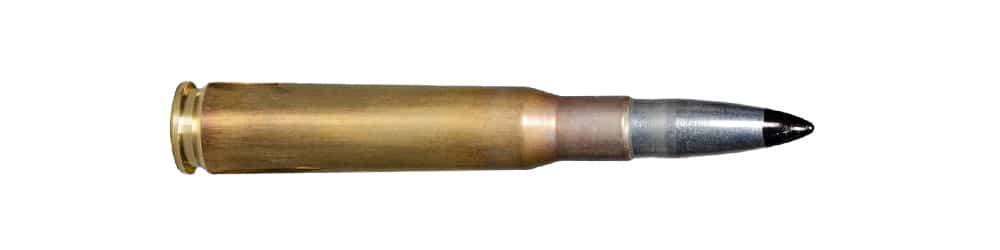
This cartridge was developed for the M2 Browning heavy machine gun in the late 1910s and entered official service in 1921 to meet a need for anti-aircraft ammunition. The cartridge itself has been manufactured in many variants: several generations of standard bullet, tracer, armor-piercing, incendiary, and sabot ammunition. Ammunition for machine guns is packaged in continuous strips using metal links.
The .50 BMG cartridge is also used in anti-material rifles and is the NATO caliber par excellence. A wide variety of ammunition is available, and the availability of competition ammunition has increased the usefulness of .50 caliber rifles by allowing for more accurate shooting than lower quality ammunition.
Typical bullet weight: 600 to 800 grains.
Initial velocity/representative energy: approximately 2,890 to 3,050 ft/s (880 to 930 m/s) with many types of ammunition. Pressure and energy (C.I.P. Pmax and EE) of 3,700 bars and 15,000 joules.
Effective range: anti-material ammunition with a very long effective range of up to 2,750 yards (2,500 m), historically used beyond this range in specialized contexts.
Uses: heavy machine gun, anti-material rifles, long-range precision/anti-material firing, neutralization of vehicles/equipment, military/strategic use, and anecdotally, heavy class ELR competitions.
Advantages: Immense energy and penetration (hits material targets, aircraft engines, vehicles).
Disadvantages: Extreme weight, significant recoil, logistics, and legal restrictions in many jurisdictions for civilian ownership. In the field of sport shooting, this caliber is rarely used due to its ballistic performance, which is inferior to the .416 Barrett, its significant cost, and the very limited number of shooting ranges that allow its use.
Notes regarding use with PGM Précision rifles: PGM Précision has over 30 years of experience with this caliber and its weapon, the Hécate II, which is used by numerous armed forces and intervention groups around the world. One of the remarkable features of this weapon, in addition to its ergonomics and ease of use, is the exceptional lifespan of its barrel. Thanks to cutting-edge manufacturing processes, this barrel can easily withstand 10,000 shots and more (many times more than conventional magnum caliber barrels!).
Link to the C.I.P. data sheet: https://bobp.cip-bobp.org/uploads/tdcc/tab-i/50-browning-fr.pdf
To summarize how the 20 calibers offered by PGM Precision meet a number of criteria, in relative terms, the table below provides a score based on:
These scores are relative and based on an equal weighting of the selected criteria. They do not take into account the shooter’s individual preferences, personal criteria, or the relative importance they place on each criterion.
| Potential accuracy | Optimal shooting distance | Recoil and comfort | Barrel wear rate | Ammunition availability | Ammunition price | Overall score | |
|---|---|---|---|---|---|---|---|
| .308 Winchester | 8 | 5 | 8 | 10 | 10 | 10 | 8,5 |
| 6.5 Creedmoor | 9 | 5 | 9 | 7 | 8 | 8 | 7,7 |
| 6mm Creedmoor | 9 | 5 | 10 | 7 | 5 | 9 | 7,5 |
| 6.5×47 Lapua | 9 | 5 | 10 | 10 | 1 | 10 | 7,5 |
| 7mm-08 Remington | 8 | 5 | 8 | 8 | 7 | 9 | 7,5 |
| 6mm XC | 9 | 5 | 10 | 7 | 5 | 7 | 7,2 |
| 6mm BR | 10 | 4 | 10 | 8 | 4 | 6 | 7,0 |
| 6.5-284 Norma | 8 | 6 | 7 | 5 | 4 | 10 | 6,7 |
| .260 Remington | 8 | 5 | 8 | 7 | 5 | 7 | 6,7 |
| 7mm PRC | 7 | 6 | 7 | 6 | 5 | 9 | 6,7 |
| 6.5 PRC | 7 | 6 | 7 | 6 | 6 | 7 | 6,5 |
| .284 Winchester | 8 | 6 | 7 | 6 | 2 | 6 | 5,8 |
| .338 Lapua Magnum | 6 | 8 | 5 | 3 | 7 | 6 | 5,8 |
| .300 PRC | 6 | 7 | 5 | 3 | 5 | 8 | 5,7 |
| .300 Norma Magnum | 6 | 7 | 5 | 3 | 5 | 6 | 5,3 |
| .338 Norma Magnum | 6 | 8 | 5 | 3 | 4 | 6 | 5,3 |
| .375 Swiss P | 5 | 10 | 4 | 3 | 2 | 5 | 4,8 |
| .300 Savage | 2 | 3 | 3 | 8 | 1 | 9 | 4,3 |
| .416 Barrett | 5 | 10 | 3 | 2 | 1 | 1 | 3,7 |
| .50 BMG | 4 | 10 | 2 | 1 | 2 | 3 | 3,7 |
Taking into account the same criteria as above and segmenting the calibers by typical use (as defined in the “Quick Guide to Choosing the Caliber” section above), the general table is broken down into the following tables by use:
| Benchrest | Score |
|---|---|
| 6mm Creedmoor | 7,5 |
| 6.5×47 Lapua | 7,5 |
| 6mm XC | 7,2 |
| 6mm BR | 7,0 |
| PRS | Score |
|---|---|
| 6.5 Creedmoor | 7,7 |
| 6mm Creedmoor | 7,5 |
| 6.5×47 Lapua | 7,5 |
| 6mm XC | 7,2 |
| .260 Remington | 6,7 |
| 6.5 PRC | 6,5 |
| F-Class & others competitions | Score |
|---|---|
| .308 Winchester | 8,5 |
| 6.5 Creedmoor | 7,7 |
| 6mm Creedmoor | 7,5 |
| 6.5×47 Lapua | 7,5 |
| 6mm XC | 7,2 |
| 6.5-284 Norma | 6,7 |
| .260 Remington | 6,7 |
| 7mm PRC | 6,7 |
| 6.5 PRC | 6,5 |
| .284 Winchester | 5,8 |
| LRS, long-range precision matches | Score |
|---|---|
| .338 Lapua Magnum | 5,8 |
| .300 PRC | 5,7 |
| .300 Norma Magnum | 5,3 |
| .338 Norma Magnum | 5,3 |
| ELR, very long-range precision matches | Score |
|---|---|
| .375 Swiss P | 4,8 |
| .416 Barrett | 3,7 |
| .50 BMG | 3,7 |
This article has presented all the calibers offered to its sport shooters by PGM Precision and has shared several years of advice and feedback.
With its 20 calibers, the brand meets most of the needs of the most demanding shooters. PGM Precision continues to listen to its customers, and to expand its caliber selection. This evolution is enabled by the open and modular design of its sniper rifles, allowing it to accept new calibers as they are developed. This guarantees PGM Precision rifle owners many years of use and satisfaction.
Need advice?
×
